The U.S. unemployment rate has now been above the unusually high level of 8 percent since the first full month of President Barack Obama's White House tenure. But whether that imperils his bid for re-election is far from clear.
In an oft-cited U.S. political fact, no incumbent president has won re-election since World War II when the jobless rate has been higher than the 7.2 percent recorded in late 1984, when Ronald Reagan easily won a second four-year term. When the unemployment rate was higher, Americans voted three other presidents out of office.
The government said Friday the jobless rate in July edged higher to 8.3 percent.

x
Romney says the Obama policies have failed and that he could boost the U.S. economy and job growth at a faster pace. Mr. Obama says the jobless rate has not declined as fast as he would like, but that expansion of the country's labor market has been steady as the country recovers from the biggest downturn since the Great Depression of the 1930s.
Historically, the jobless rate in the U.S. has hovered around 5 percent. But political scientist Lynn Vavreck at the University of California at Los Angeles says she is not convinced that the current high jobless rate spells defeat for Obama.
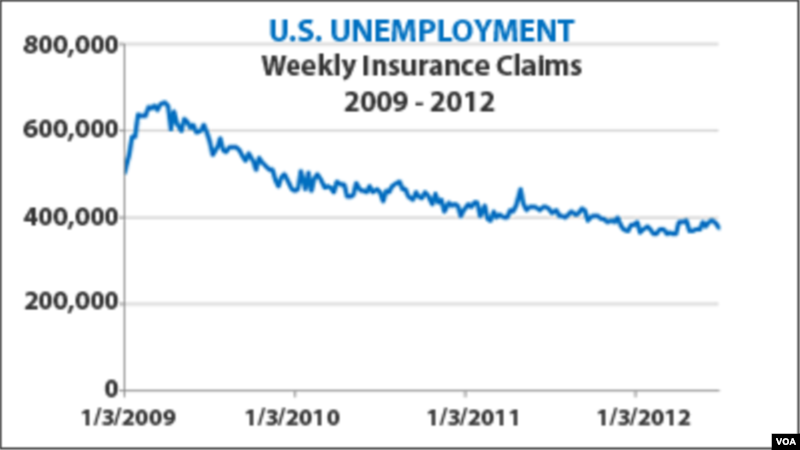
She says that a more important barometer is the trend in the jobless rate - which is down from a high of 10 percent during the Obama presidency - and measurement of the country's economic output, known as the gross domestic product.
“The trend is what matters," Vavreck stated. "And the trend in the unemployment rate will do a pretty good job of predicting aggregate vote outcomes. But what does a better job is trend in GDP change, so, over the first six months, say, of an election year.”
The U.S. economy, the world's largest, is advancing, but only at a sluggish pace, up 1.5 percent in the April-to-June period, after increasing at a slightly faster pace earlier in the year.
"So these unemployment numbers, if I were a betting person, I would say I’d have to bet on an Obama re-election, and certainly with the GDP numbers. It’s not big growth, but it is a slow-growing economy," said Vavreck. "And incumbent presidents in slow-growing economies are hard to beat.”


